by Barbara Rimkunas
This "Historically Speaking" column was published in the Exeter News-Letter.
Long before Paul Revere made his famous ride into the Massachusetts countryside, he rode to New Hampshire – once even to Exeter. His first ride was in December of 1774, when New Englanders were worried that the Royal government was attempting to suppress potentially violent protest by hiding all the available gunpowder. In southeast New Hampshire, most of the gunpowder stores were held at a small fort, or castle, in Portsmouth harbor known as Fort William and Mary. Who’s gunpowder was it? The Colonists justifiably believed that, as British subjects, the gunpowder at Fort William and Mary was supposed to belong to the Province of New Hampshire. In Massachusetts, there had been numerous skirmishes during the summer and fall due to the movement of gunpowder. A Committee of Safety was formed to keep the other colonies informed and one of the messengers of this committee was Boston silversmith, Paul Revere.
On December 13th, Revere rode into Portsmouth – not Exeter, we’re not there yet – to tell New Hampshire that they should move that gunpowder away from the coast. You know, just in case they might need it later. Having delivered the message, Revere rode back to Boston
Patriots in Portsmouth held a protest rally at noon on December 14th to organize. Several hundred men boarded boats, met up with more men from New Castle and headed for the fort. There they encountered Captain John Cochran and his small contingent of provincial soldiers guarding the fort. In all fairness, they tried their best to protect the fort. They fired off some warning shots, which were not returned by the Patriots, and refused to yield the fort when demanded. But six men really can’t pull this off when facing 400 fired up locals. The soldiers were subdued and around 100 barrels of gunpowder were loaded into the boats and rowed to Portsmouth by late in the afternoon.
The following day, a second raid, led by John Sullivan, took arms and artillery pieces. These were taken to Durham for safekeeping. Royal Governor Wentworth was aghast at these events. He wrote, “besides committing many treasonable insults and outrages… they did break open the magazine of said castle and plundered it of above 100 barrels of gunpowder with upwards of sixty stand of small arms, and did also force from the ramparts of said castle and carry off 16 pieces of cannon and other military stores in open hostility and direct oppugnation of his majesty’s government and in the most atrocious contempt of his crown and dignity.” He ended his proclamation with “God Save the King.” Having said this, he also realized there there would be little he could do about the events. Local constables and militia members would not be willing to arrest the raiders.
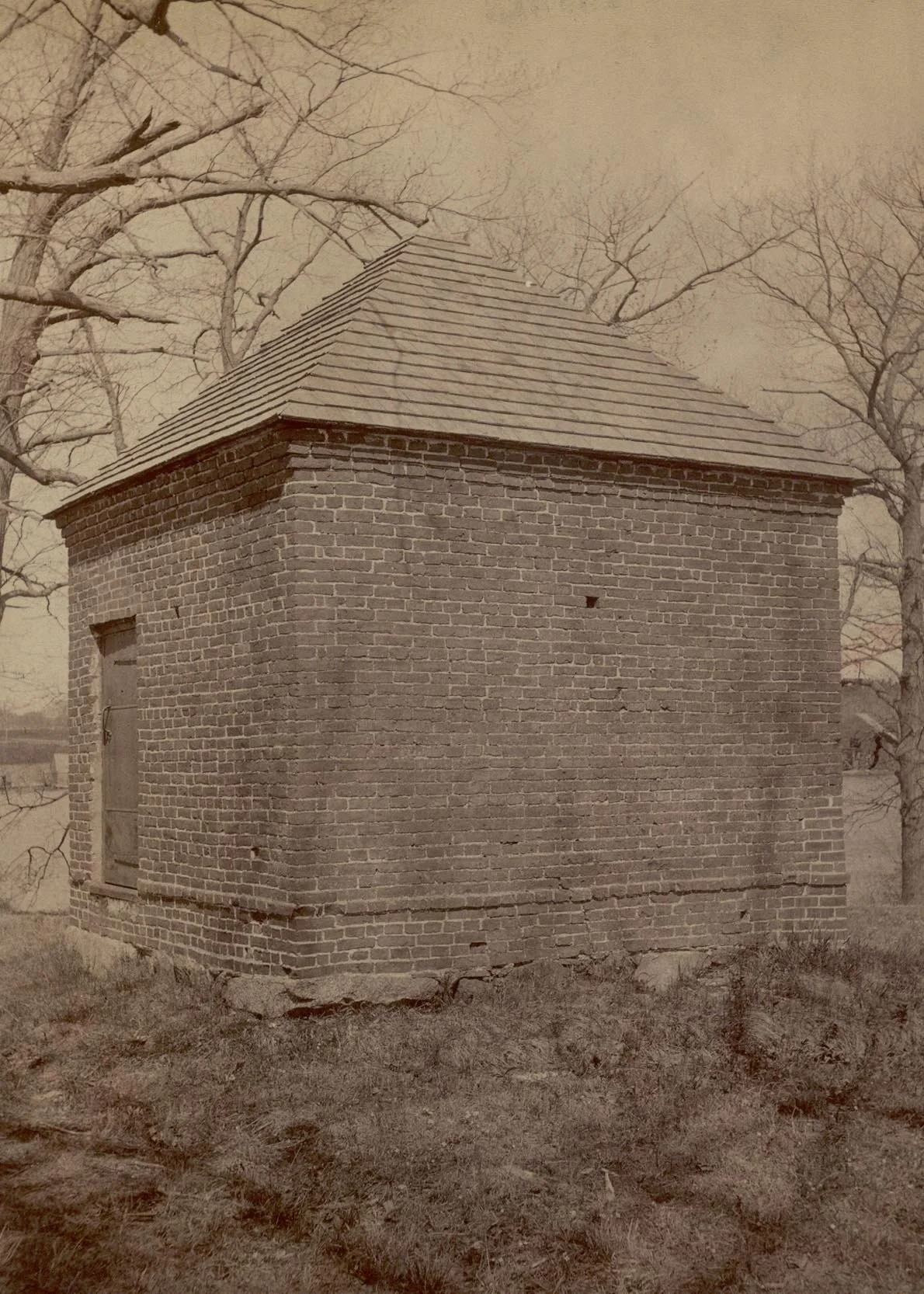
Where did the gunpowder wind up? There’s a legend that it was stored in the basement of the Durham Congregational Church, but within a few months we find 72 barrels had made their way to Exeter, which was already serving as the de facto capital of New Hampshire. 29 barrels remained in Exeter, first at individual homes, but later stored in the powder house, which was much safer than in Grandpa’s barn. The remainder was parceled out to the neighboring towns of Kingston, Epping, Poplin (now called Fremont) , Nottingham, Brentwood, Londonderry and Portsmouth. Some of this gunpowder was later used at the Battle of Bunker Hill and helped arm the troops after Lexington and Concord.
So, when did Paul Revere come to Exeter? He arrived in town on January 26th to have a discussion with the Provincial Congress after the delegates created a constitution declaring they would be a self-governing province. Governor Wentworth was aware of this visit and Exeter’s role. In a letter he wrote, “Paul Revere went express thither yesterday noon. It portends a storm rather than peace.” Wentworth was correct in his assessment. Things heated up in Massachusetts in the following months, sparking the events that led to the American Revolution.
Barbara Rimkunas is curator of the Exeter Historical Society. Support the Exeter Historical Society by becoming a member! Join online at: www.exeterhistory.org